This was Richfield’s entry into the 2025 Strongest Town contest.
Thanks to Kate Aitchison, Mary Supple, Katie Rodriguez, Melissa Poehlman, Julie Urban, Kristin Asher, and Karl Huemiller for their review and feedback!
Submitted Feb 14, 2025 at 11am.
Q:
A good street is a place where people can navigate among businesses, services and social spaces safely and comfortably. In addition to being pleasant and socially productive, these places are financially productive for towns, producing more tax revenue per acre than other development patterns. Unfortunately, many streets sacrifice safety in an effort to prioritize automobile travel at high speeds; this kind of bad street design is the primary cause of vehicle crashes involving fatalities and traumatic injuries. What are people in your city doing to build streets that prioritize people and merely accommodate automobiles — not the other way around?
A:
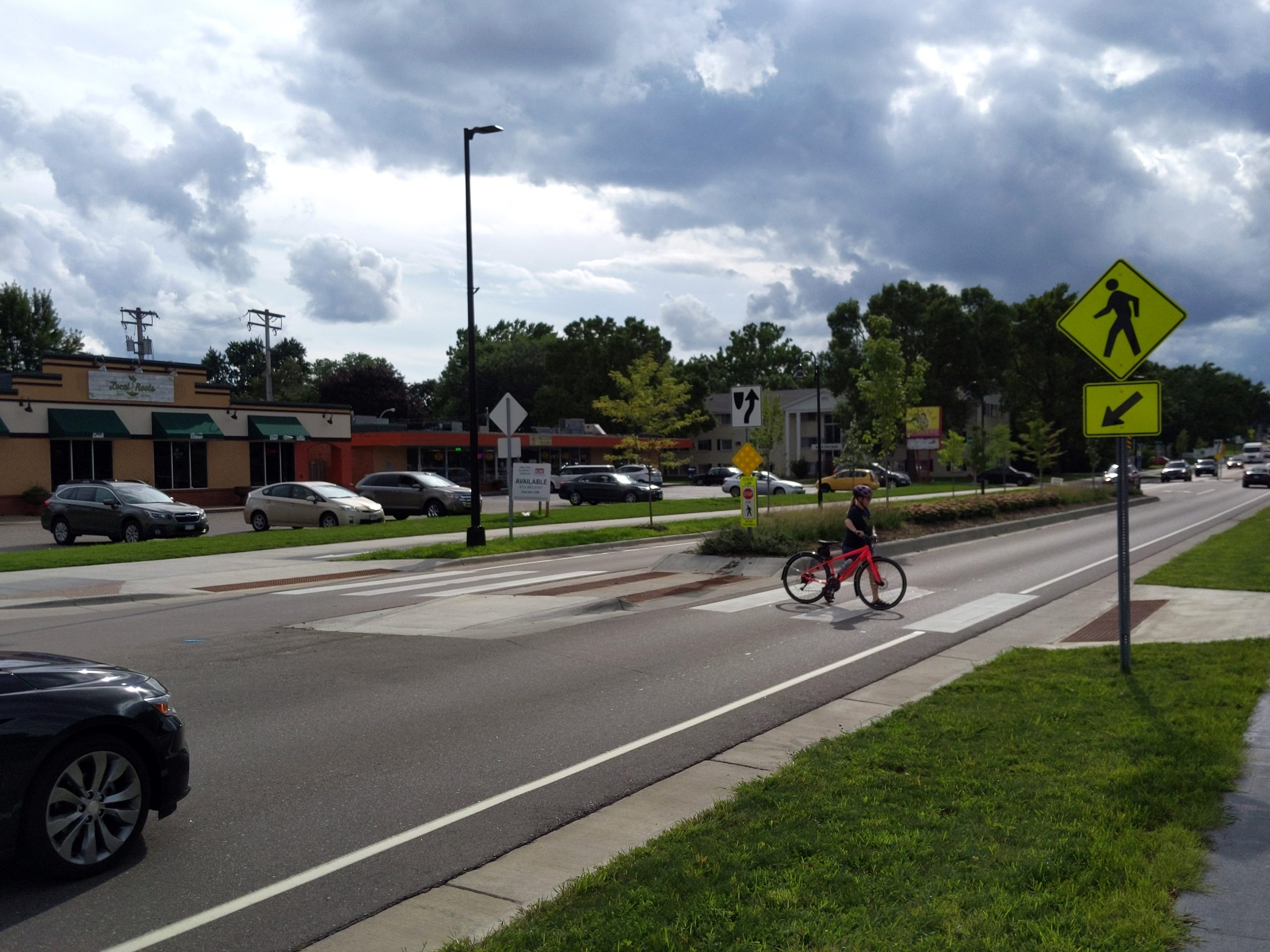
Richfield is a leader in street design that builds community and improves safety for people walking and biking. Richfield’s first generation of arterial streets were four-lane, undivided “stroads” with 35 mph speed limits, no bike space, and barely-usable sidewalks. Our resident-led Transportation Commission and professional engineering staff worked together to change this approach. We saw the first tangible results in 2010: rebuilding one of our city-owned streets from 4 lanes to a 2-lane roadway with bike lanes, grassy boulevards, and improved sidewalks.
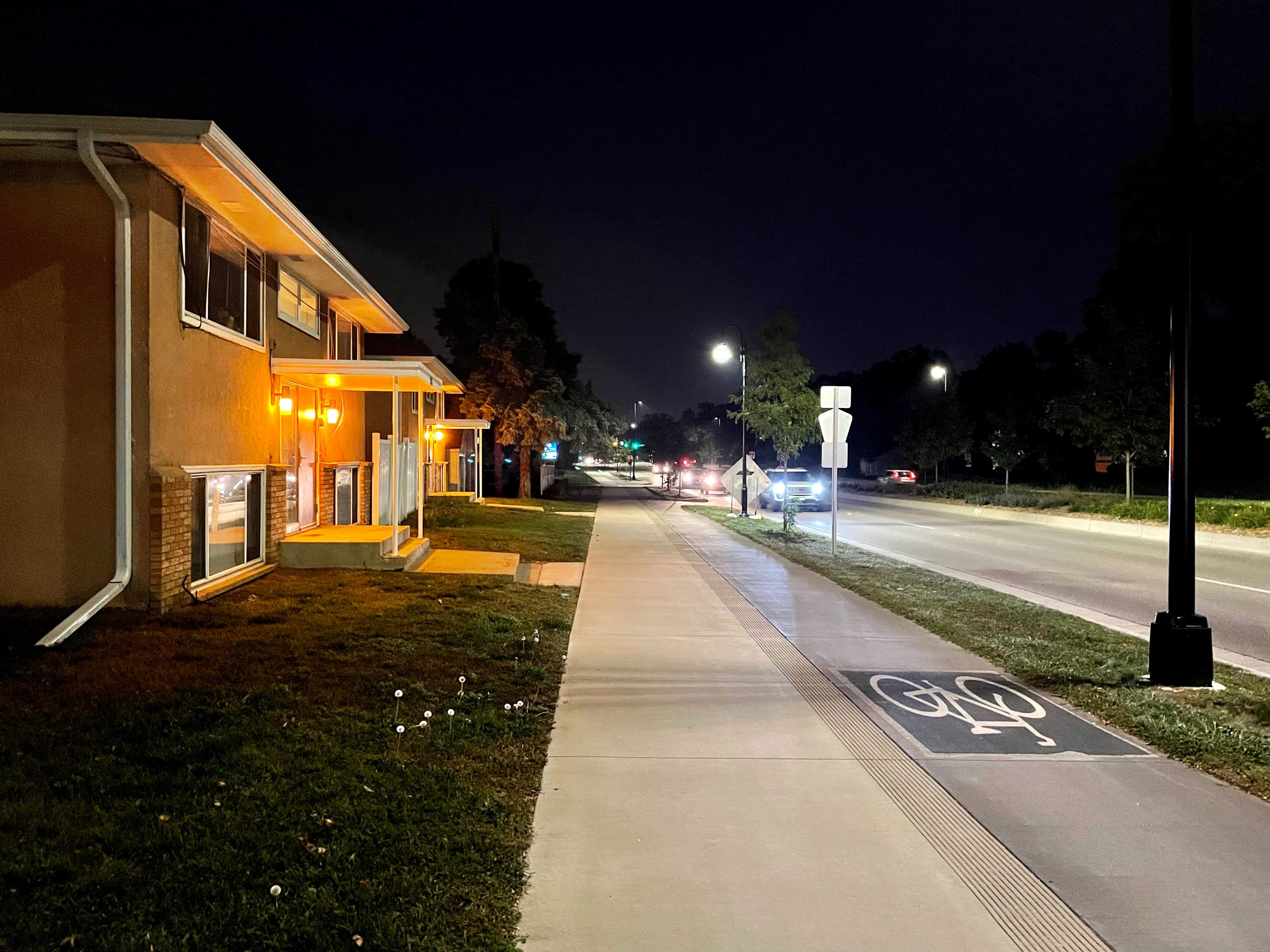
Since then, our progress has accelerated — fully reconstructing 7.1 miles of arterial streets, and restriping, lowering speed limits, and doing other retrofits to an additional 7.7 miles of arterials. This has resulted in a high-quality network of bikeways and ever-improving pedestrian space. In 2016, Richfield installed the longest protected bike lane in the region, with 2.75 miles of 66th Street featuring one-way protected bike lanes. The new 66th provides safe access to 16 parks within a quarter-mile, including the city’s swimming pool. We plan to utilize a similar design in our city-county reconstruction of Nicollet Avenue in 2026.
Richfield has also been a leader in roundabouts, with eight roundabouts added on arterial streets since 2008, and an additional five planned by the end of this decade. This has reduced the need for multi-lane intersections, and improved safety for all users. We have also continually improved these designs to enhance pedestrian comfort based on user feedback.
We have done all of these arterial improvements without the use of special assessments — our arterial streets are shared amenities that benefit the whole community, and it has been our practice to avoid special assessments for these streets.
Q:
Excessive surface parking harms towns. It makes them less financially productive and prevents new local businesses from getting started. It forces land owners and developers to build more parking than they actually need, often at the expense of more housing. Still, most North American cities require this excessive parking in their codes in the form of parking minimum mandates. If you’ve had this experience in your place, you’re not alone, but we hope you’re taking steps to change that. What policies and approaches are people in your city using to decrease or eliminate parking minimum mandates and encourage development that is more productive than parking lots?
A:
Richfield continues to make progress on reducing surface parking requirements. Although we have not completely eliminated parking requirements, we have worked to ensure that they are at or below market norms. In addition, we impose parking maximums to dissuade excessive parking.
We continually review and reduce requirements in response to market changes. Within the last two years, we reduced our parking requirements for houses, for apartments, for restaurants, and for museums and libraries. In fact, the last change has allowed our local library to reduce its parking lot nearly in half, allowing for more green space in a major park — and less unsightly, unnecessary pavement. City leaders will be considering additional reductions to parking requirements — including the possibility of elimination — downtown and along major transit lines through policy work planned for 2025.
Our parking requirements do not only serve cars; in recent years we have expanded requirements for electric vehicle charging, and adopted a comprehensive bicycle parking strategy — including support for e-bikes, sheltered parking in new housing, and creating a standard that prioritizes parking at bikeable/walkable businesses.
Our mixed-use zoning districts discourage the use of excessive surface parking, and nearly every major redevelopment has included structured parking.
Q:
Your city’s housing market should be flexible enough to respond to evolving needs and capacity, yet most communities have rigid zoning laws that prevent even the simplest of changes. What are people in your town doing to promote the incremental and bottom-up development of more housing options and greater housing flexibility?
A:
Like many American cities, Richfield’s largest era of growth was post-World War II, where we expanded from a village with scattered housing developments to a fully developed, gridded, and dense city.
As late as the 1990s, Richfield’s zoning changes prioritized competition with newer suburbs, emphasizing suburban design features like large lots, multi-car garages, and allowing only single-family homes in the vast majority of the city. This was not a financially sustainable approach, since it meant fewer homes could be built in the same area, and at a higher cost for each one.
In the last 15 years, Richfield has diversified its approach, adding over 1000 new housing units, and updating our comprehensive plan and zoning code to allow a greater diversity of housing choices. This included “legalizing Richfield” — expanding areas where apartments can be built, re-allowing duplexes by-right, and allowing smaller lots that were already common in parts of the city. We also allow accessory dwelling units (ADUs), and were one of the first cities in the Twin Cities metro to do so.
Nearly all major redevelopment areas of the city use a flexible, mixed-use zoning that prioritizes attractive and human-centered design over specific edicts on use. In our downtown, we allow densities of up to 200 units per acre, and allow relatively high densities in all of our mixed-use districts.
The changes in Richfield’s approach on housing development aren’t only on the ground, but in philosophy: the most recent changes have prioritized having clear, universal rules for development by right. This contrasts with many peer cities that have highly restrictive zoning codes, and allow for most development only through extensive use of planned-unit developments (PUDs), or many variances. Simpler rules promote fairness and predictability, and allow smaller developers to develop in our city more easily.
Please answer all of the following 3 questions.
NOTE: These ended up being non-paragraph, single-line text fields. As a result I had to significantly shorten the answers.
Q:
In a truly strong town, elected officials and residents work together to prioritize their community’s needs. What does communication between elected officials and residents look like in your town? *
A as submitted:
Richfield uses resident boards to study policy changes in detail and engage with the City Council and the community at large. Many of these boards are unique to Richfield, like our Transportation Commission, that helps co-create new street designs with engineering staff and residents who use the street. We’ve worked to make more information about our meetings available online and ensured apartment residents receive the same information from the city as homeowners. And city staff and council members are present at many community events, both ones led by the city as well as privately organized festivals.
A (original full answer):
Richfield has worked to be increasingly transparent and engaged with the community. For decades, we have had resident boards that study specific areas in detail and advise the council in decisions. Some of these boards — such as the Planning Commission — are dictated by state law, but most were created at the discretion of the City. These allow resident input in a deep and meaningful way that most cities don’t have a structure for — like our Transportation Commission, that hosts community open houses and helps guide design for new streets alongside professional staff. Council members participate with these boards as well, allowing them to better represent these resident ideas, as well as to communicate Council work to these highly engaged residents.
In recent years, Richfield has made efforts to be more transparent and clear in council decision-making. A decade ago, nothing more than the time and date were posted online about council work sessions — now the full packet, slides, and even audio recordings are available for all to access. For public hearings for land-use applications, Richfield goes above and beyond state requirements by sending notices to each individual apartment resident, as opposed to only the building owner.
Richfield also engages residents informally — the City’s Richfield Recap newsletter has 4,000 subscribers who receive weekly updates, with a 75% engagement rate. Our social media pages update residents on Facebook and Instagram. And staff and elected officials actively participate in many community events, including our annual PennFest open streets festival, 4th of July celebration, National Night Out, and a Cinco de Mayo festival. Starting in fall 2025, the seasonal Parks and Recreation program guide — which is mailed to all households within the city — will contain four new pages of general city updates in addition to the normal recreation program offerings.
Q:
In a Strong Town, residents and leaders don’t wait years to improve their community; they see a problem and get right to work addressing it with whatever resources they have on hand. What’s one example of a time that people in your city (elected officials, business owners, residents, etc.) observed a struggle that some residents were having and took swift, ideally low-cost action to address that struggle? (Ex: In some communities that Strong Towns works with, residents noticed that key bus stops lacked benches for people to sit on while they wait for the bus, so they banded together to build and install new benches in a matter of weeks. In other communities, local leaders noticed that popular streets lacked bike lanes and went out immediately to paint lanes and delineate them with cones so that cyclists can travel more safely.) *
A as submitted:
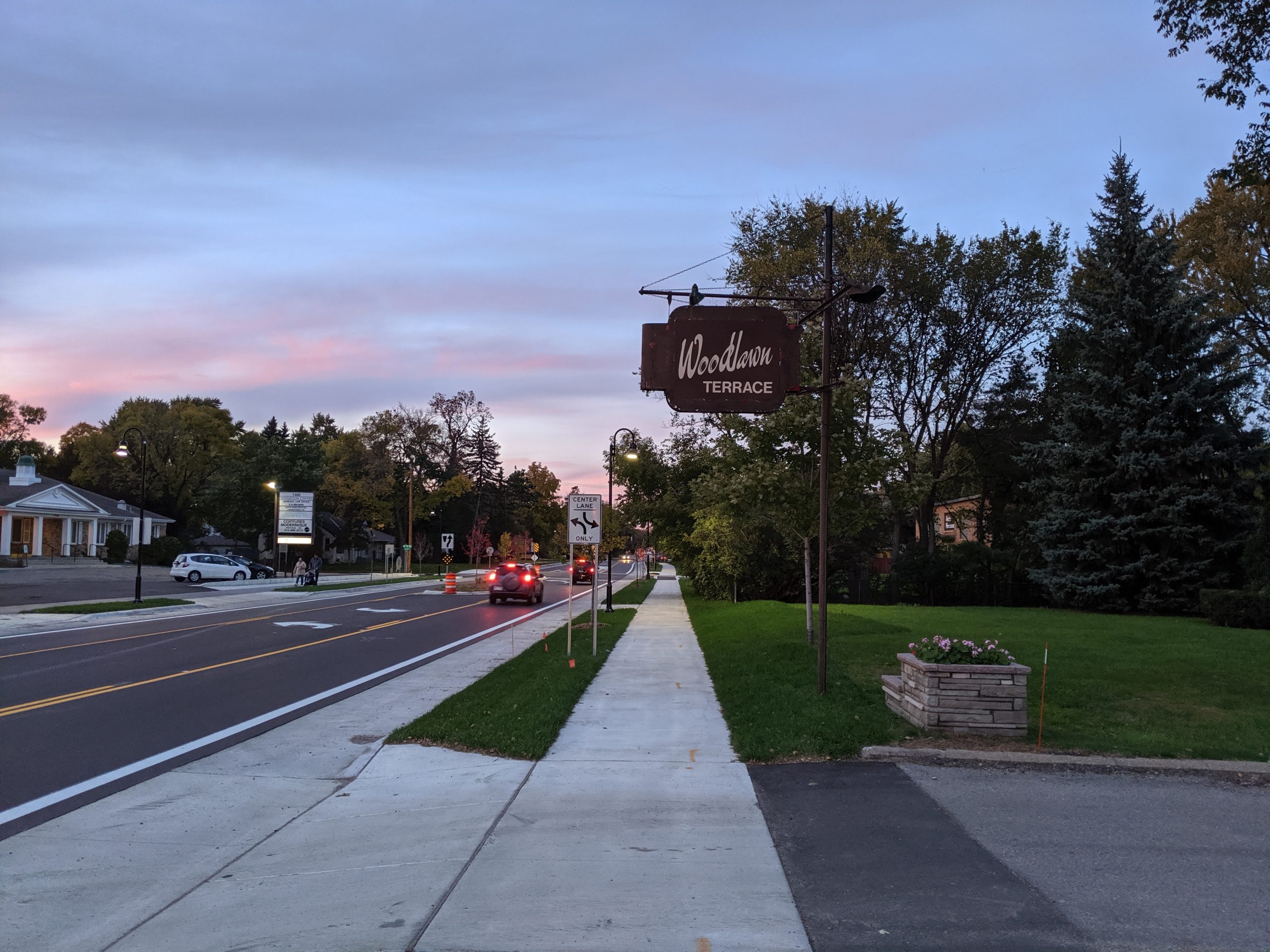
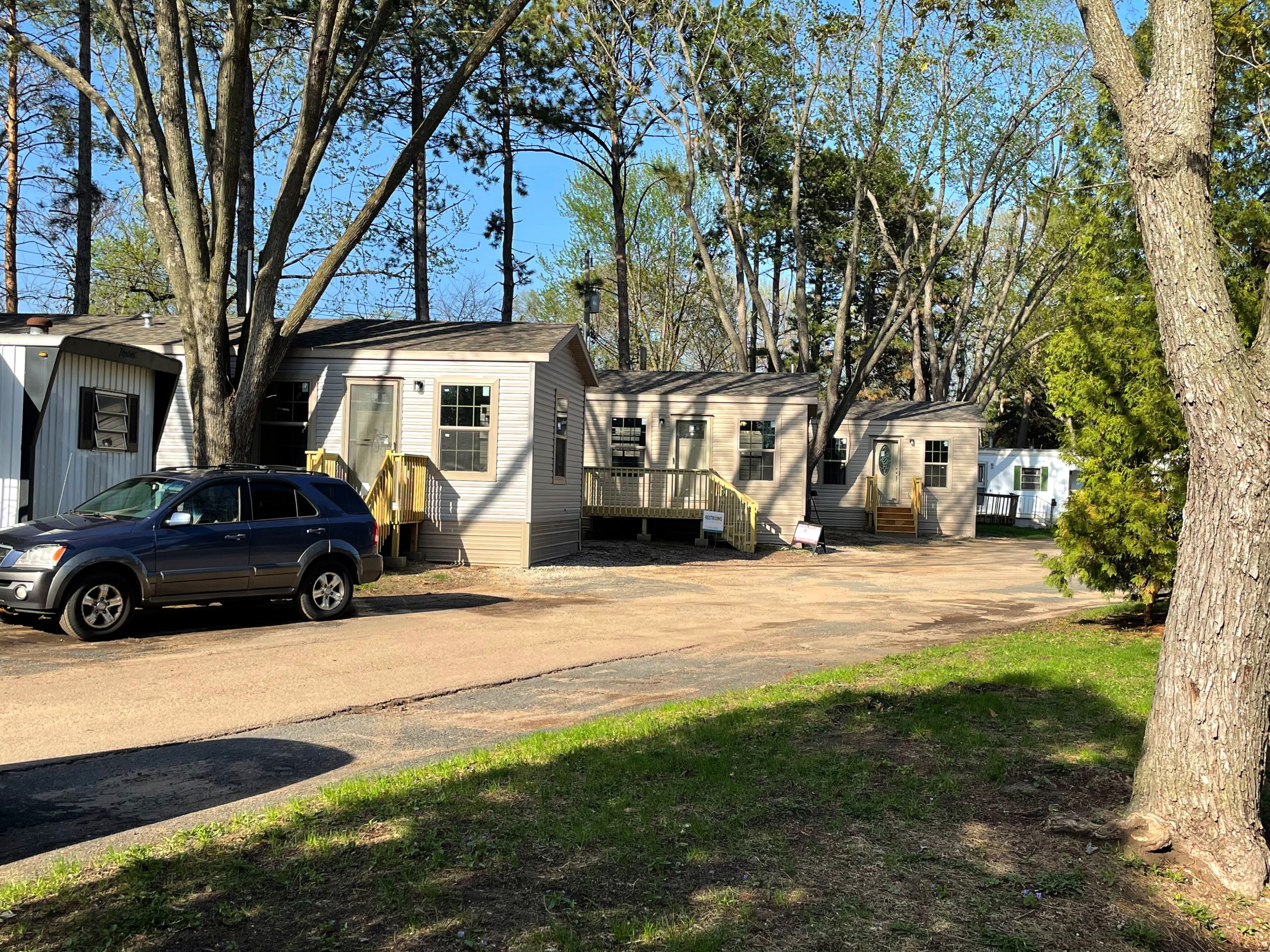
One of the best examples of Richfield working quickly to respond to a resident need was the work in 2021 to preserve the Woodlawn Terrace manufactured home park. While many of these parks have come under predatory ownership that priced out existing residents — or leveled entirely for redevelopment — residents and the park and the city worked together to preserve this unique for-sale ownership opportunity. The city committed $350,000 to utility improvements, and even revised its down payment assistance program to help residents buy a manufactured home. Now under cooperative ownership, land rent is stable and this community has been preserved for the future.
A (original full answer):
As a smaller city with a modest tax base, Richfield often has to be nimble to meet resident needs. A particularly proud accomplishment was the partnership to preserve the Woodlawn Terrace manufactured home community in 2021. Most similar manufactured home communities in the Twin Cities have been lost to redevelopment, losing affordable for-sale housing opportunities. Even more troubling, those that have remained have come under predatory ownership that takes advantage of the ground-lease structure to coerce residents into unreasonably high land rent.
Residents of Woodlawn Terrace banded together to form a cooperative to own the land in the future, in cooperation with the City of Richfield and Northcountry Cooperative Foundation. The City of Richfield committed $350,000 in utility upgrades, helping to connect the 53 lots to the city water system, and to rebuild the internal street system of the community. We also revised our down payment assistance program to allow manufactured housing to qualify for assistance.
Existing residents were able to stay in their homes, older trailers were removed, and efforts were made to bring the community to full occupancy. The conversion was so successful that the former owner of the park moved to a new unit on-site — staying with the property he held for decades. The city continues to support the project by providing a lease of a strip of adjacent park land, allowing larger-sized homes to fit and better serve families.
Q:
What about your town inspires you to keep working to make it stronger? What sets your town apart as truly special? *
A as submitted:
Like many communities across the country, we saw rapid growth after World War II, going from a largely farming community to a dense, gridded city with tens of thousands of residents. But our cycle of change didn’t end there: we’ve continued to change our city to fit our residents’ needs. When the Minneapolis Airport expanded and worsened noise impacts, the City worked to redevelop the areas most impacted. When our streets were no longer serving community needs for walking and biking, we set a new course. When residents demanded greater transparency at City Hall, we changed our procedures and opened the door for more residents to get involved. We’ve invested in important community amenities to help residents of all walks of life. And we’ve done this with broad community support — for example, our 2024 sales tax referendums for new park amenities passed with 2:1 voter approval. Richfield’s history is one of change for the good of our community — and our future is too. I’m proud to be a part of it.
A (original full answer):
Richfield is a community that truly embraces change. Like many communities across the country, we saw rapid growth after World War II, going from a farming community with isolated residential areas to a fully gridded city with tens of thousands of residents. But our cycle of change didn’t end there: we have embraced major redevelopment over the decades — changing our city to fit our residents’ needs. When the Minneapolis-St. Paul Airport expanded and worsened noise impacts to Richfielders, the City worked to redevelop the areas most impacted. When our streets were no longer serving community needs for walking and biking, we set a new course. When residents demanded greater transparency at City Hall, we changed our procedures and opened the door for more residents to get involved.
Richfield has charted a common-sense approach to equity, demonstrating a community commitment to building prosperity without exclusion. We’ve worked to preserve affordability, while embracing growth of our tax base. We’ve invested in important community amenities to help residents of all walks of life. And we’ve done this with broad community support — for example, our 2024 sales tax referendums for new park amenities passed with 2:1 voter approval.
Richfield’s history is one of change for the good of our community — and our future is too. I’m proud to be a part of it.
Gallery
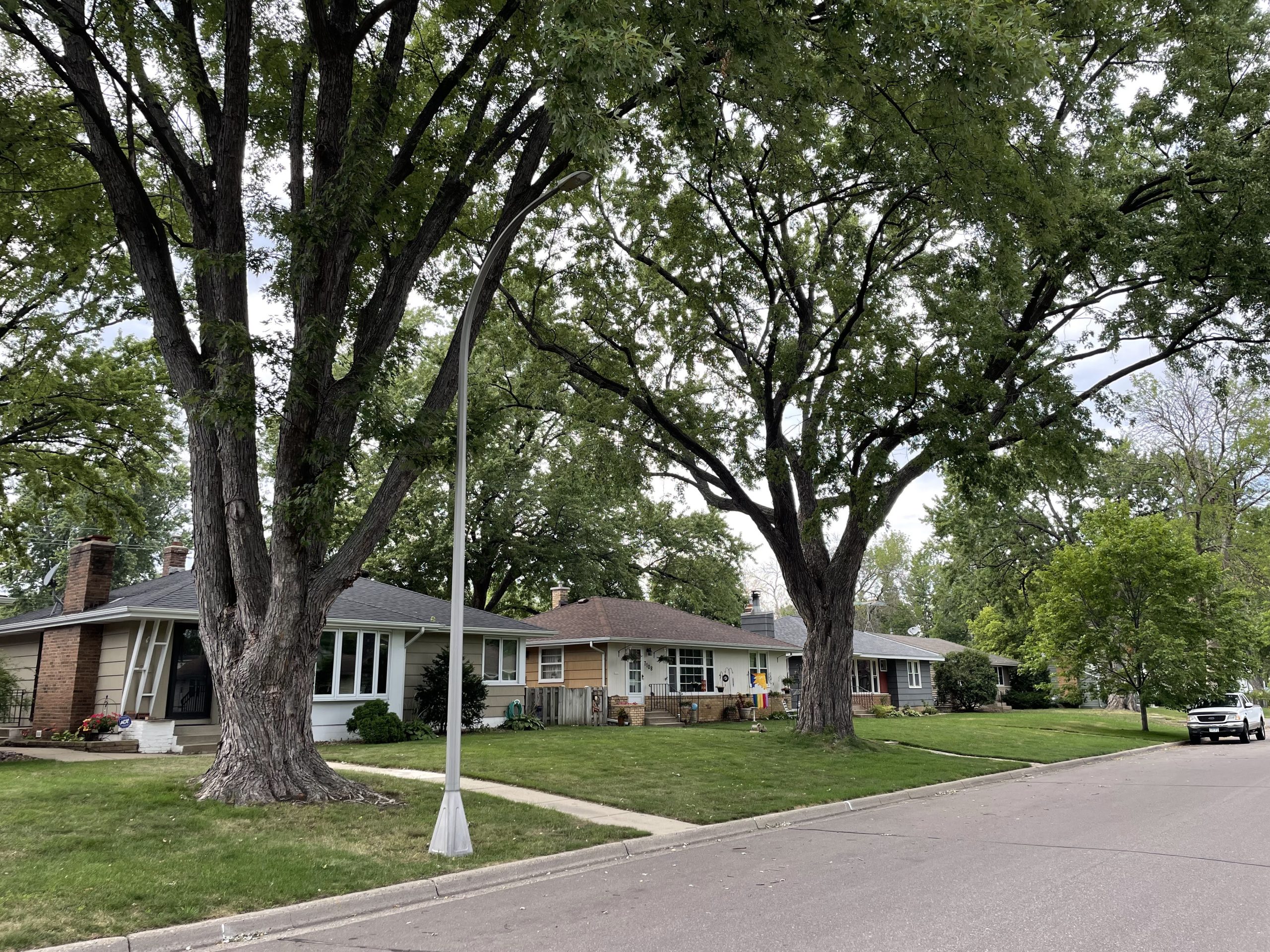
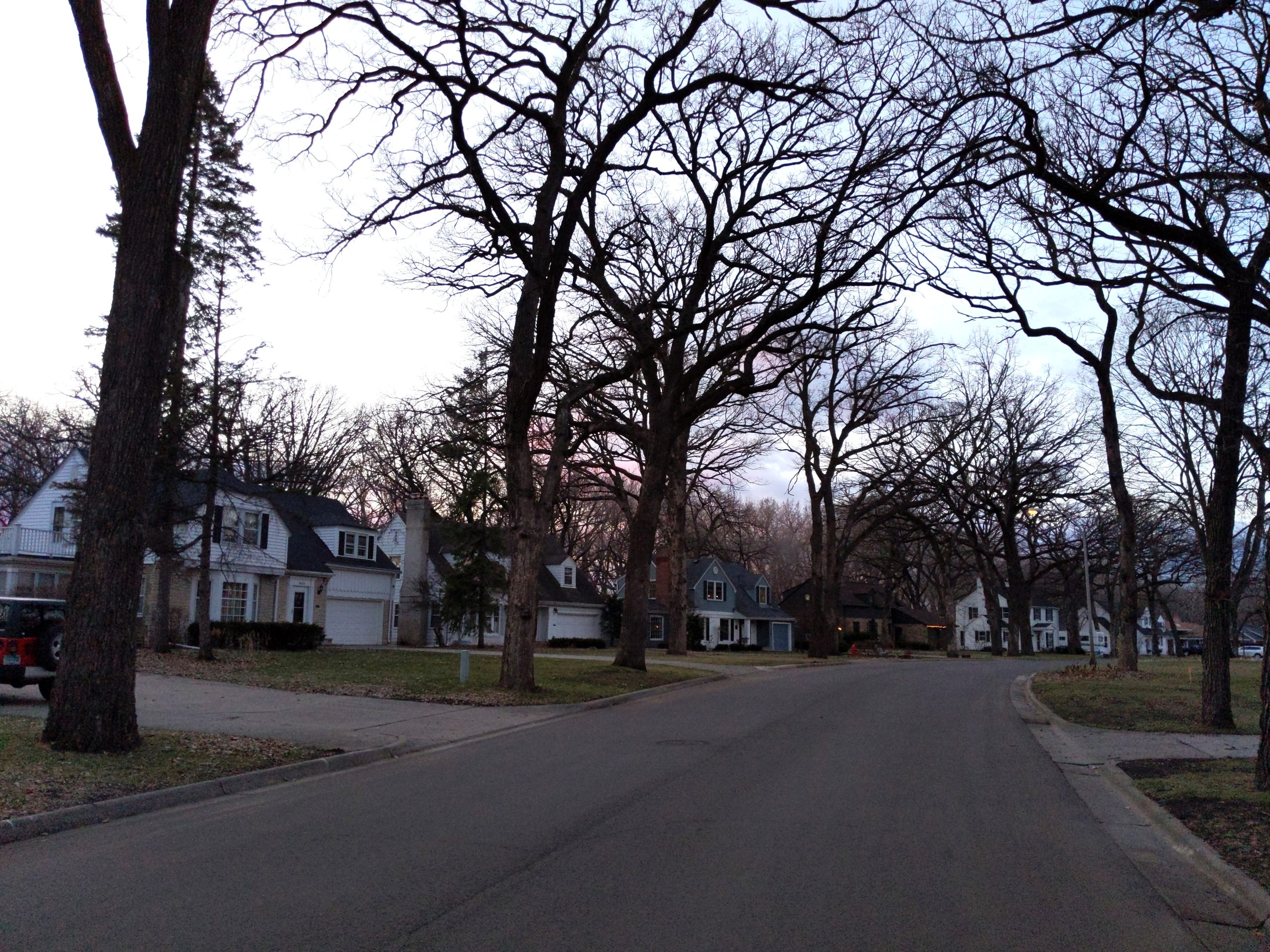
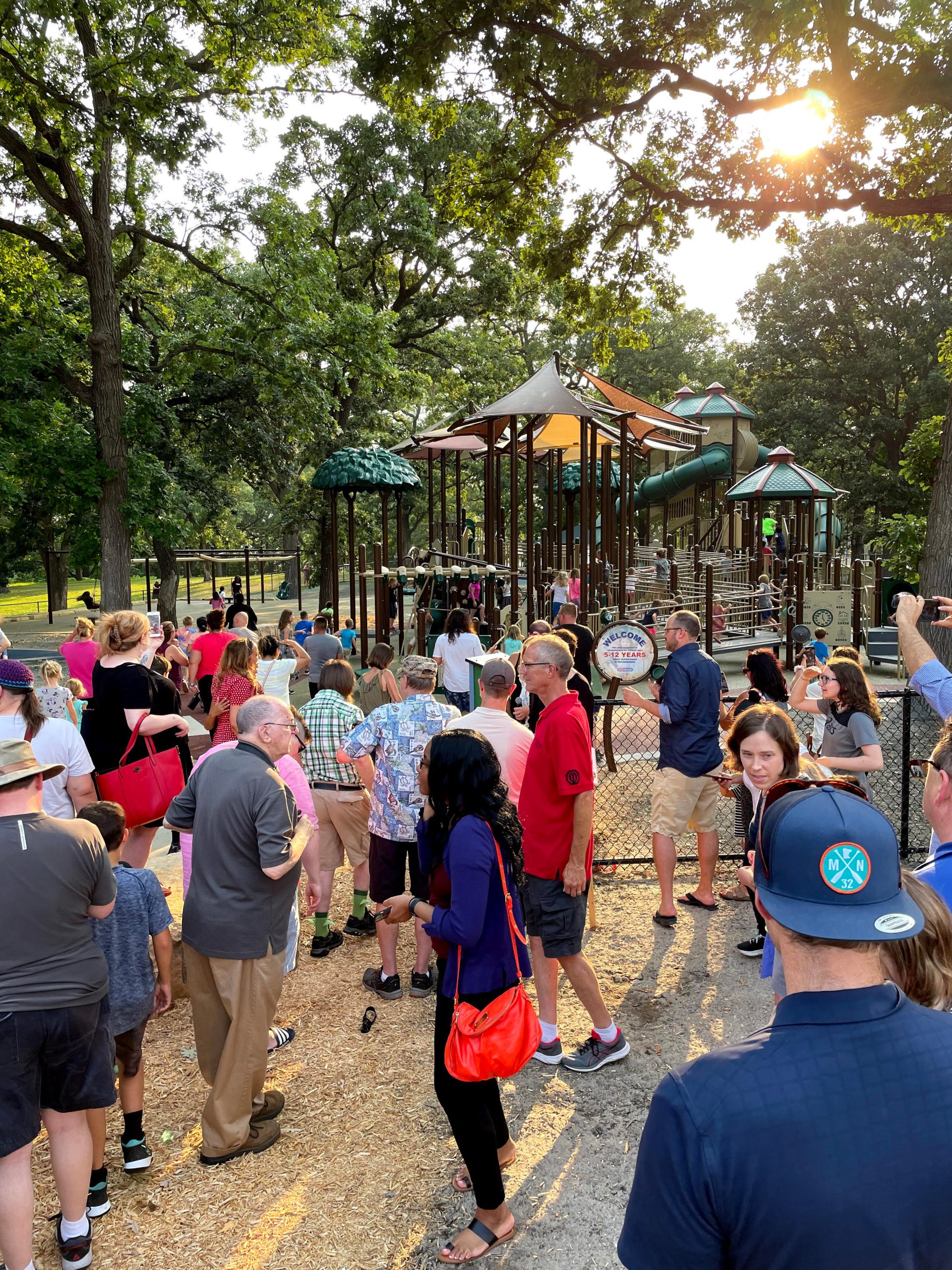
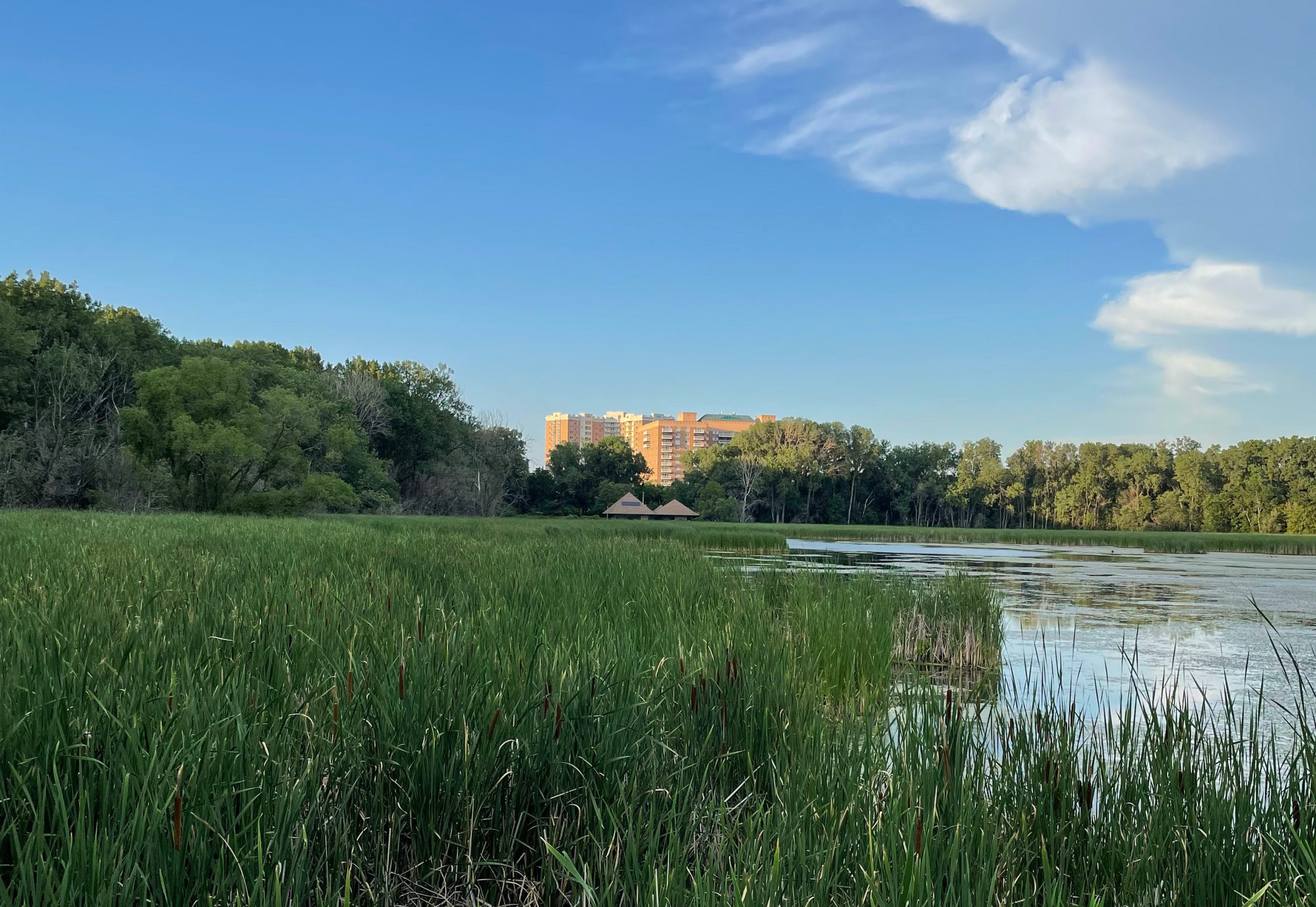
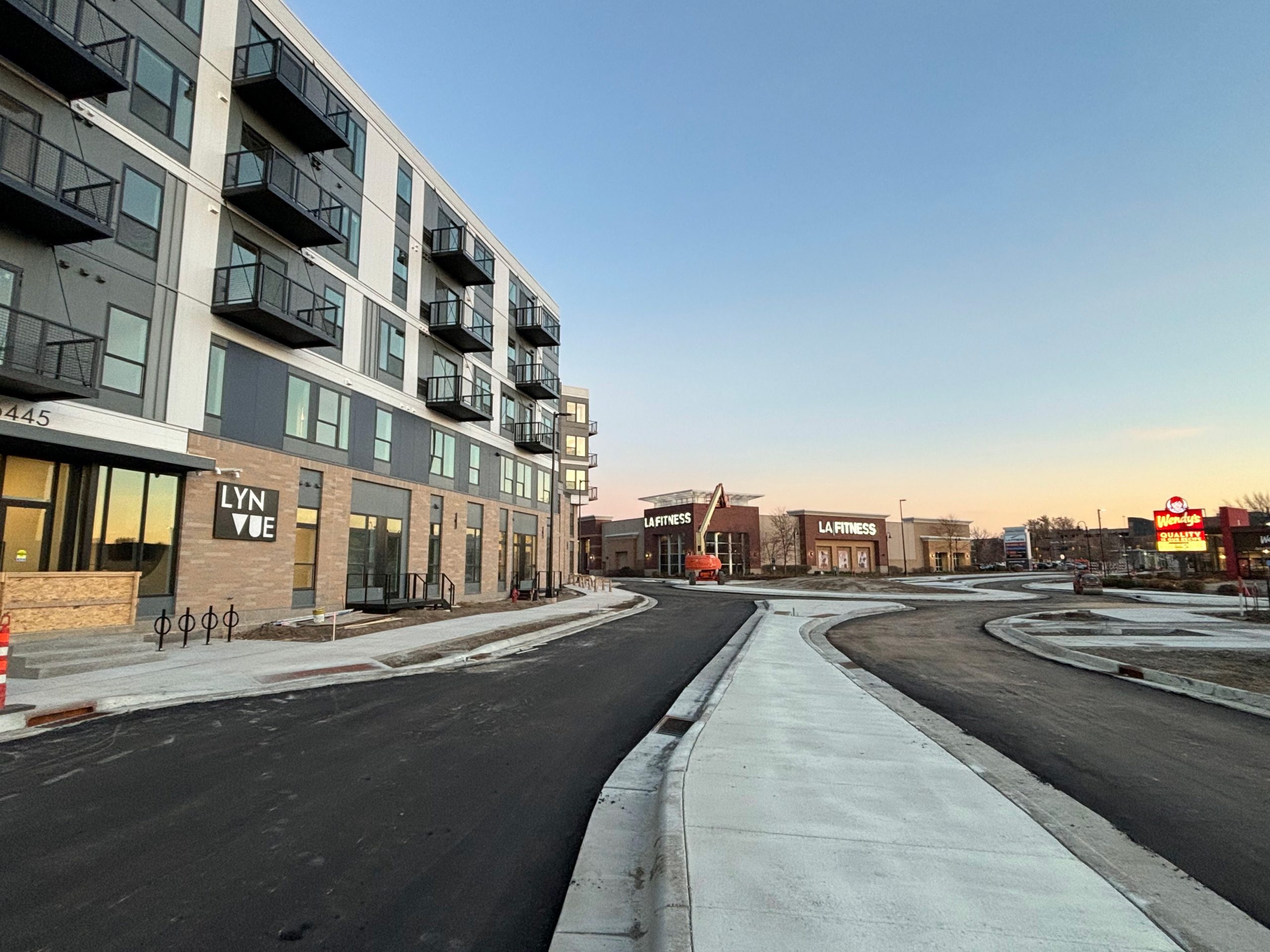
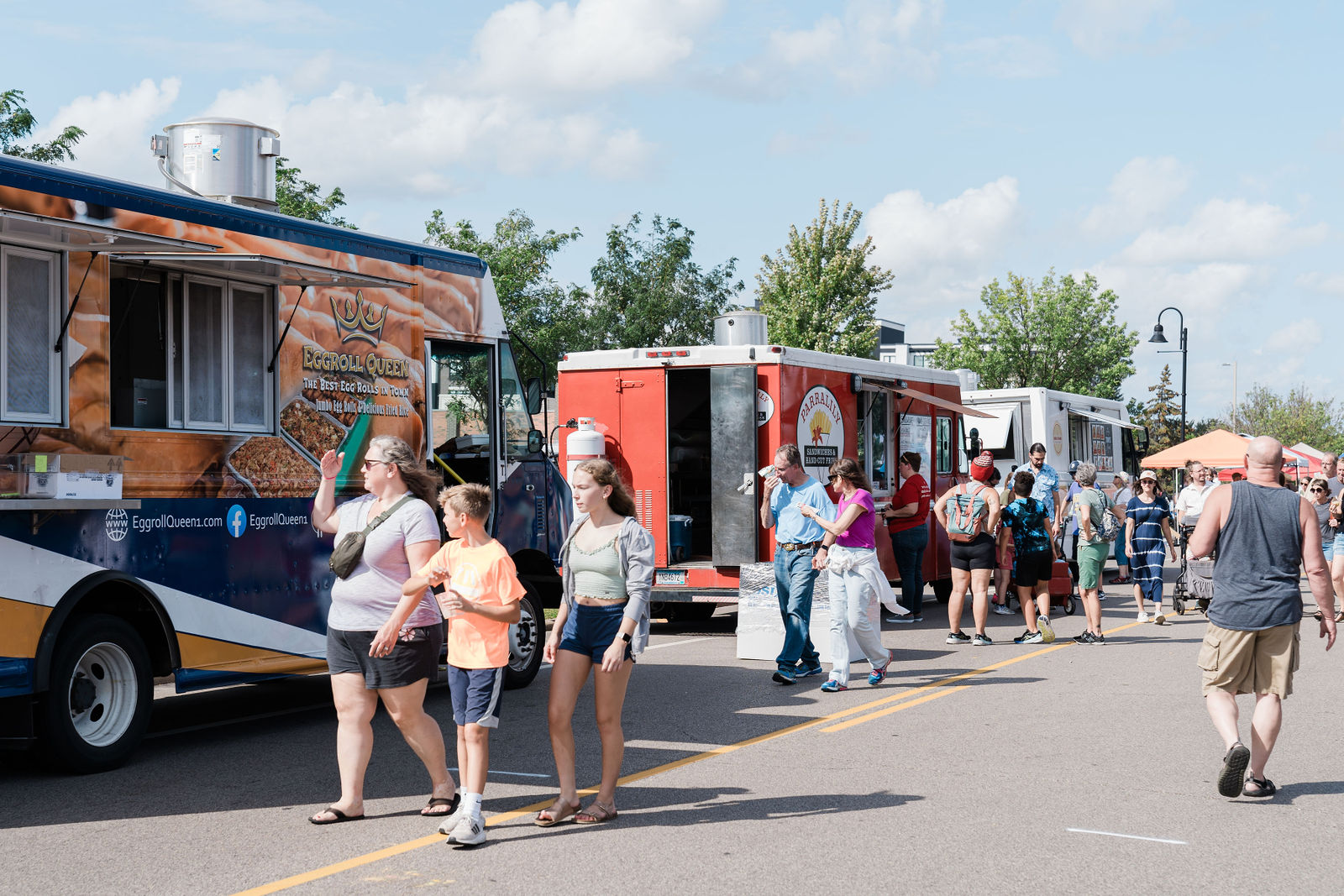
Strong Towns requested 10 photos to represent Richfield. These were the selection: